Monday, July 26, 2010

Wednesday, July 21, 2010
Monday, July 12, 2010
Friday, July 09, 2010
Thursday, July 08, 2010
A "renaissance" in HIV vaccine research
Antibody Kills 91% of HIV Strains
I remember hearing in 1990 a prediction that we would have an HIV vaccine by 1997. Here's hoping this turns into something.
I remember hearing in 1990 a prediction that we would have an HIV vaccine by 1997. Here's hoping this turns into something.
Tuesday, June 29, 2010
Monday, June 28, 2010
Thursday, June 17, 2010
Money Can't Buy America Love
Millions of dollars are being pumped into hearts and minds projects from Kabul to Kandahar. Trouble is, it's not working. And it might even be making things worse.
Wednesday, June 16, 2010
Monday, June 14, 2010
Wednesday, June 09, 2010
Google accused of criminal intent over StreetView data
Google is "almost certain" to face prosecution for collecting data from unsecured wi-fi networks, according to Privacy International (PI).
Tuesday, June 08, 2010
Monday, June 07, 2010
Friday, June 04, 2010
Monday, May 31, 2010
Canada, blowin' smoke
weird! boston is currently engulfed in smoke. its smells and looks like the whole city is on fire. thanks canada!
Saturday, May 29, 2010
Friday, May 28, 2010
Lucky Harry
Not long ago Harry Reid looked like he might go the way of Chris Dodd. And he still has a hell of a battle on his hands for reelection. But for an interlocking series of reasons, things seem at least a little brighter than they did only a couple months ago.
Thursday, May 27, 2010
Wednesday, May 26, 2010
Kristof's katastrophic kolumn
Moonshine or the Kids?
A blogpost response here: Poor People Behaving Badly?
Read some of the comments -- they are quite interesting.
another piece: Pissed off by Kristof
btw -- the title is just an alliteration, not an allusion to the KKK.
A blogpost response here: Poor People Behaving Badly?
Read some of the comments -- they are quite interesting.
another piece: Pissed off by Kristof
btw -- the title is just an alliteration, not an allusion to the KKK.
Monday, May 24, 2010
Saturday, May 08, 2010
Friday, April 30, 2010
Spring comes 10 days earlier in changed U.S. climate
Certainly seems to have come here early too... we've already planted the lettuce!
Wednesday, April 28, 2010
Monday, April 26, 2010
Sunday, April 25, 2010
Thursday, April 22, 2010
Monday, April 19, 2010
Saturday, April 17, 2010
Is Marriage Good for Your Health?
Initial research was an overwhelming yes... but our understanding is getting a bit more nuanced:
But while it’s clear that marriage is profoundly connected to health and well-being, new research is increasingly presenting a more nuanced view of the so-called marriage advantage. Several new studies, for instance, show that the marriage advantage doesn’t extend to those in troubled relationships, which can leave a person far less healthy than if he or she had never married at all. One recent study suggests that a stressful marriage can be as bad for the heart as a regular smoking habit. And despite years of research suggesting that single people have poorer health than those who marry, a major study released last year concluded that single people who have never married have better health than those who married and then divorced.There is even a biological reason why, if your partner is under some stress, that a simple holding of the hand, or a hug can do wonders:
...
Kiecolt-Glaser told me that the overall health lesson to take away from the new wave of marriage-and-health literature is that couples should first work to repair a troubled relationship and learn to fight without hostility and derision. But if staying married means living amid constant acrimony, from the point of view of your health, “you’re better off out of it,” she says.
Researchers have also started to examine the salutary health effects of social relationships, including those of a good marriage. In one recent study, James A. Coan, an assistant professor of psychology and a neuroscientist at the University of Virginia, recruited 16 women who scored relatively high on a questionnaire assessing marital happiness. He placed each woman in three different situations while monitoring her brain with an f.M.R.I. machine, which offers a way to observe the brain’s response to almost any kind of emotional stimulation. In one situation, to simulate stress, he subjected the woman to a mild electric shock. In a second, the shock was administered, but the woman held the hand of a stranger; in a third, the hand of her husband.There are a lot more interesting experiments in that article.
Both instances of hand-holding reduced the neural activity in areas of the woman’s brain associated with stress. But when the woman was holding her husband’s hand, the effect was even greater, and it was particularly pronounced in women who had the highest marital-happiness scores. Holding a husband’s hand during the electric shock resulted in a calming of the brain regions associated with pain similar to the effect brought about by use of a pain-relieving drug.
Coan says the study simulates how a supportive marriage and partnership gives the brain the opportunity to outsource some of its most difficult neural work. “When someone holds your hand in a study or just shows that they are there for you by giving you a back rub, when you’re in their presence, that becomes a cue that you don’t have to regulate your negative emotion,” he told me. “The other person is essentially regulating your negative emotion but without your prefrontal cortex. It’s much less wear and tear on us if we have someone there to help regulate us.”
Sunday, April 11, 2010
Krugman: Building a Green Economy
If you listen to climate scientists — and despite the relentless campaign to discredit their work, you should — it is long past time to do something about emissions of carbon dioxide and other greenhouse gases. If we continue with business as usual, they say, we are facing a rise in global temperatures that will be little short of apocalyptic. And to avoid that apocalypse, we have to wean our economy from the use of fossil fuels, coal above all.
But is it possible to make drastic cuts in greenhouse-gas emissions without destroying our economy?
Thursday, April 08, 2010
Why I won't buy an iPad (and think you shouldn't, either)
Gadgets come and gadgets go
Gadgets come and gadgets go. The iPad you buy today will be e-waste in a year or two (less, if you decide not to pay to have the battery changed for you). The real issue isn't the capabilities of the piece of plastic you unwrap today, but the technical and social infrastructure that accompanies it.
If you want to live in the creative universe where anyone with a cool idea can make it and give it to you to run on your hardware, the iPad isn't for you.
If you want to live in the fair world where you get to keep (or give away) the stuff you buy, the iPad isn't for you.
If you want to write code for a platform where the only thing that determines whether you're going to succeed with it is whether your audience loves it, the iPad isn't for you.
Wednesday, April 07, 2010
Google PowerMeter

... is a free energy monitoring tool that helps you save energy and money. Using energy information provided by utility smart meters and energy monitoring devices, Google PowerMeter enables you to view your home's energy consumption from anywhere online. Find out what people are saying about Google PowerMeter.
Unfortunately, it isn't in my area yet... here is a piece on the back-story.
Tuesday, April 06, 2010
Neologisms and such
Once again, The Washington Post has published the winning
submissions to its yearly neologism contest, in which readers
are asked to supply alternate meanings for common words. The
winners are:
1. Coffee (n.), the person upon whom one coughs.
2. Flabbergasted (adj.), appalled over how much weight you have
gained.
3. Abdicate (v.), to give up all hope of ever having a flat
stomach.
4. Esplanade (v.), to attempt an explanation while drunk.
5. Willy-nilly (adj.), impotent.
6. Negligent (adj.), describes a condition in which you
absentmindedly answer the door in your nightgown.
7. Lymph (v.), to walk with a lisp.
8. Gargoyle (n.), olive-flavored mouthwash.
9. Flatulence (n.) emergency vehicle that picks you up after
you are run over by a steamroller.
10. Balderdash (n.), a rapidly receding hairline.
11. Testicle (n.), a humorous question in an exam.
12. Rectitude (n.), the formal, dignified bearing adopted by
proctologists.
13. Pokemon (n), a Rastafarian proctologist.
14. Oyster (n.), a person who sprinkles his conversation with
Yiddishisms.
15. Frisbeetarianism (n.), (back by popular demand): The belief
that, when you die, your Soul flies up onto the roof and gets
stuck there.
16. Circumvent (n.), an opening in the front of boxer shorts
worn by Jewish men.
The Washington Post's Style Invitational also asked readers to
take any word from the dictionary, alter it by adding,
subtracting, or changing one letter, and supply a new
definition. Here are this year's winners:
1. Bozone (n.): The substance surrounding stupid people that
stops bright ideas from penetrating. The bozone layer,
unfortunately, shows little sign of breaking down in the near
future.
2. Foreploy (v): Any misrepresentation about yourself for the
purpose of getting laid.
3. Cashtration (n.): The act of buying a house, which renders
the subject financially impotent for an indefinite period.
4. Giraffiti (n): Vandalism spray-painted very, very high.
5. Sarchasm (n): The gulf between the author of sarcastic wit
and the person who doesn't get it.
6. Inoculatte (v): To take coffee intravenously when you are
running late.
7. Hipatitis (n): Terminal coolness.
8. Osteopornosis (n): A degenerate disease. (This one got extra
credit.)
9. Karmageddon (n): it's like, when everybody is sending off
all these really bad vibes, right? And then, like, the Earth
explodes and it's like, a serious bummer.
10. Decafalon (n.): The gruelling event of getting through the
day consuming only things that are good for you.
11. Glibido (v): All talk and no action.
12. Dopeler effect (n): The tendency of stupid ideas to seem
smarter when they come at you rapidly.
13. Arachnoleptic fit (n.): The frantic dance performed just
after you've accidentally walked through a spider web.
14. Beelzebug (n.): Satan in the form of a mosquito that gets
into your bedroom at three in the morning and cannot be cast
out.
15. Caterpallor (n.): The colour you turn after finding half a
grub in the fruit you're eating.
And the pick of the literature:
16. Ignoranus (n): A person who's both stupid & an ass hole.
submissions to its yearly neologism contest, in which readers
are asked to supply alternate meanings for common words. The
winners are:
1. Coffee (n.), the person upon whom one coughs.
2. Flabbergasted (adj.), appalled over how much weight you have
gained.
3. Abdicate (v.), to give up all hope of ever having a flat
stomach.
4. Esplanade (v.), to attempt an explanation while drunk.
5. Willy-nilly (adj.), impotent.
6. Negligent (adj.), describes a condition in which you
absentmindedly answer the door in your nightgown.
7. Lymph (v.), to walk with a lisp.
8. Gargoyle (n.), olive-flavored mouthwash.
9. Flatulence (n.) emergency vehicle that picks you up after
you are run over by a steamroller.
10. Balderdash (n.), a rapidly receding hairline.
11. Testicle (n.), a humorous question in an exam.
12. Rectitude (n.), the formal, dignified bearing adopted by
proctologists.
13. Pokemon (n), a Rastafarian proctologist.
14. Oyster (n.), a person who sprinkles his conversation with
Yiddishisms.
15. Frisbeetarianism (n.), (back by popular demand): The belief
that, when you die, your Soul flies up onto the roof and gets
stuck there.
16. Circumvent (n.), an opening in the front of boxer shorts
worn by Jewish men.
The Washington Post's Style Invitational also asked readers to
take any word from the dictionary, alter it by adding,
subtracting, or changing one letter, and supply a new
definition. Here are this year's winners:
1. Bozone (n.): The substance surrounding stupid people that
stops bright ideas from penetrating. The bozone layer,
unfortunately, shows little sign of breaking down in the near
future.
2. Foreploy (v): Any misrepresentation about yourself for the
purpose of getting laid.
3. Cashtration (n.): The act of buying a house, which renders
the subject financially impotent for an indefinite period.
4. Giraffiti (n): Vandalism spray-painted very, very high.
5. Sarchasm (n): The gulf between the author of sarcastic wit
and the person who doesn't get it.
6. Inoculatte (v): To take coffee intravenously when you are
running late.
7. Hipatitis (n): Terminal coolness.
8. Osteopornosis (n): A degenerate disease. (This one got extra
credit.)
9. Karmageddon (n): it's like, when everybody is sending off
all these really bad vibes, right? And then, like, the Earth
explodes and it's like, a serious bummer.
10. Decafalon (n.): The gruelling event of getting through the
day consuming only things that are good for you.
11. Glibido (v): All talk and no action.
12. Dopeler effect (n): The tendency of stupid ideas to seem
smarter when they come at you rapidly.
13. Arachnoleptic fit (n.): The frantic dance performed just
after you've accidentally walked through a spider web.
14. Beelzebug (n.): Satan in the form of a mosquito that gets
into your bedroom at three in the morning and cannot be cast
out.
15. Caterpallor (n.): The colour you turn after finding half a
grub in the fruit you're eating.
And the pick of the literature:
16. Ignoranus (n): A person who's both stupid & an ass hole.
Episode 20: Corruption
Daniel Kaufmann and Mushtaq Khan debate the role and importance of tackling corruption as part of a development strategy.
Thursday, April 01, 2010
Sunday, March 28, 2010
Saturday, March 27, 2010
Thursday, March 25, 2010
Tuesday, March 23, 2010
Monday, March 22, 2010
Armageddon!!
Better fill your shelter with goodies... and wtf was the "here comes Speedy" comment? Anyone have a clue?
Whats in the bill
Here is what to expect if the bill becomes law:
WITHIN THE FIRST YEAR OF ENACTMENT
*Insurance companies will be barred from dropping people from coverage when they get sick. Lifetime coverage limits will be eliminated and annual limits are to be restricted.
*Insurers will be barred from excluding children for coverage because of pre-existing conditions.
*Young adults will be able to stay on their parents' health plans until the age of 26. Many health plans currently drop dependents from coverage when they turn 19 or finish college.
*Uninsured adults with a pre-existing conditions will be able to obtain health coverage through a new program that will expire once new insurance exchanges begin operating in 2014.
*A temporary reinsurance program is created to help companies maintain health coverage for early retirees between the ages of 55 and 64. This also expires in 2014.
*Medicare drug beneficiaries who fall into the "doughnut hole" coverage gap will get a $250 rebate. The bill eventually closes that gap which currently begins after $2,700 is spent on drugs. Coverage starts again after $6,154 is spent.
*A tax credit becomes available for some small businesses to help provide coverage for workers.
*A 10 percent tax on indoor tanning services that use ultraviolet lamps goes into effect on July 1.
WHAT HAPPENS IN 2011
*Medicare provides 10 percent bonus payments to primary care physicians and general surgeons.
*Medicare beneficiaries will be able to get a free annual wellness visit and personalized prevention plan service. New health plans will be required to cover preventive services with little or no cost to patients.
*A new program under the Medicaid plan for the poor goes into effect in October that allows states to offer home and community based care for the disabled that might otherwise require institutional care.
*Payments to insurers offering Medicare Advantage services are frozen at 2010 levels. These payments are to be gradually reduced to bring them more in line with traditional Medicare.
*Employers are required to disclose the value of health benefits on employees' W-2 tax forms.
*An annual fee is imposed on pharmaceutical companies according to market share. The fee does not apply to companies with sales of $5 million or less.
WHAT HAPPENS IN 2012
*Physician payment reforms are implemented in Medicare to enhance primary care services and encourage doctors to form "accountable care organizations" to improve quality and efficiency of care.
*An incentive program is established in Medicare for acute care hospitals to improve quality outcomes.
*The Centers for Medicare and Medicaid Services, which oversees the government programs, begin tracking hospital readmission rates and puts in place financial incentives to reduce preventable readmissions.
WHAT HAPPENS IN 2013
*A national pilot program is established for Medicare on payment bundling to encourage doctors, hospitals and other care providers to better coordinate patient care.
*The threshold for claiming medical expenses on itemized tax returns is raised to 10 percent from 7.5 percent of income. The threshold remains at 7.5 percent for the elderly through 2016.
*The Medicare payroll tax is raised to 2.35 percent from 1.45 percent for individuals earning more than $200,000 and married couples with incomes over $250,000. The tax is imposed on some investment income for that income group.
*A 2.9 percent excise tax in imposed on the sale of medical devices. Anything generally purchased at the retail level by the public is excluded from the tax.
WHAT HAPPENS IN 2014
*State health insurance exchanges for small businesses and individuals open.
*Most people will be required to obtain health insurance coverage or pay a fine if they don't. Healthcare tax credits become available to help people with incomes up to 400 percent of poverty purchase coverage on the exchange.
*Health plans no longer can exclude people from coverage due to pre-existing conditions.
*Employers with 50 or more workers who do not offer coverage face a fine of $2,000 for each employee if any worker receives subsidized insurance on the exchange. The first 30 employees aren't counted for the fine.
*Health insurance companies begin paying a fee based on their market share.
WHAT HAPPENS IN 2015
*Medicare creates a physician payment program aimed at rewarding quality of care rather than volume of services.
WHAT HAPPENS IN 2018
*An excise tax on high cost employer-provided plans is imposed. The first $27,500 of a family plan and $10,200 for individual coverage is exempt from the tax. Higher levels are set for plans covering retirees and people in high risk professions.
12 Most Pesticide-Laden Fruits and Veggies
In descending order, the EWG's 12 most contaminated fruits and vegetables:
1. Peaches
2. Apples
3. Sweet bell peppers
4. Celery
5. Nectarines
6. Strawberries
7. Cherries
8. Kale
9. Lettuce
10. Grapes (imported)
11. Carrots
12. Pears
For the full list of all 47 fruits and veggies, go here.
Friday, March 19, 2010
Thursday, March 18, 2010
Countdown to health reform wire
Things seem to be coming together today about as well as the Dems could have expected. They seem to be getting a number of the pro-life Dems to sign on. And Stupak seems to be conceding the vote though he'll personally still vote against. They got solid news from the CBO this morning and that's pulling a few of the Blue Dogs back into the fold. We're following every development in our TPM auto-updating Countdown to Reform Wire.Latest news: With Bill Posted, 72 Hours Until Vote: The reconciliation bill just went online. That means the vote will happen in 72 hours, at about 2:15 p.m. Sunday.
Wednesday, March 17, 2010
A man loves the meat in his youth that he cannot endure in his age.
Global meat production has tripled in the past three decades and could double its present level by 2050. That's likely to have a significant impact on human health, the environment, and the global economy in the next 50 year, according to a new two-volume report, Livestock in a Changing Landscape. Key findings regarding the economic and ecological footprint of livestock:
* More than 1.7 billion animals are used in livestock production worldwide and occupy more than one-fourth of the Earth's land.
* Production of animal feed consumes about one-third of Earth's total arable land.
* Livestock production accounts for approximately 40 percent of the global agricultural gross domestic product.
* Although 1 billion poor people derive part of their livelihood from domesticated animals, commercialized industrial livestock has displaced many small, rural producers in developing countries, like India and China.
* The livestock sector, including feed production and transport, is responsible for about 18 percent of all greenhouse gas emissions worldwide (the beef, pork and poultry industries emit large amounts of CO2, methane, and other greenhouse gases).
* The livestock sector is a major environmental polluter, with much of the world's pastureland degraded by grazing or feed production, and with many forests clear-cut to make way for additional farmland.
* Feed production requires intensive use of water, fertilizer, pesticides, and fossil fuels.
* Animal waste is a serious concern, since only a third of the nutrients fed to animals are actually absorbed and the rest pollute lands and waters.
* Total phosphorous excretions of livestock are estimated to be seven to nine times greater than from humans.
Friday, March 12, 2010
Wednesday, March 10, 2010
Tuesday, March 09, 2010
Because I miss Rove and these debates so...
Visit msnbc.com for breaking news, world news, and news about the economy
I like the bet part...
Monday, March 08, 2010

Friday, March 05, 2010
Monday, March 01, 2010
Friday, February 26, 2010
Thursday, February 25, 2010

Wednesday, February 24, 2010
Saturday, February 20, 2010
sociological analysis through ideological glasses is easy!
Brooks comes out with a nice little piece: The Power Elite, that is a one of those odes to a better time when the blue blooded, working class white people were in charge, and everyone was happy. Well, those who mattered were, at least. They didn't poll the rest. Anyway, onward!
So, in a nutshell, here is his argument:
Oh, and just to be clear... I should point out that he doesn't present any data to support his underlying thesis off increased meritocracy or the decrease in trust. I assume they must be somehow temporally related, that is... increased meritocracy --> decrease in trust. He also doesn't really tell us what institutions is he talking about exactly? It is totally unclear in the piece... financial firms, public servants, politicians? This is actually quite important because it really matters what you are talking about when you talk about trust in government.
But, let's continue -- let's put aside the little issues such as all of the academic research on trust in government in the US that points to a wide variety of other factors, I'll even dismiss the argument that meritocracy in the US is failing, that the GOP often uses distrust in the government as a central campaign plank, and even the potential benefits of distrust
Let's suspend judgement for a second and give him the benefit of suspended judgement. So, prey tell, is the causal connection? What might be this general cause of distrust?
He continues
 Sure, this shape is rational!Gee, it sure was nicer when everyone could just agree -- democracy is so messy! And, let's just sweep this all under a rug. All this kerfuffle about pay-offs and public restrooms are ruining my dinner parties! Sarcasm aside -- I'll concede the bit on the perpetual state of war of the politicians. However, to argue that the poisened political environment is linked to diversity and ignore things like money to congress or the gerrymandering of congressional districts is just downright loco.
Let's soldier on!
Anyway, there is some more, but it is my bed-time, and now I can't get the 30 minutes back it took me to read the article and write this up. A piece that berates diversity based on a totally unclear concept, no empirical evidence, and not really much plausible theory. He also totally ignores incredibly important evidence that is linked to trust... for example, the fact that since the 70s we have progressively moved back to great gatsby levels of inequality, and the political economy that that entails - which seems especially important given that higher levels of inequality probably breeds distrust in government.
*sigh* well, at least he didn't base the argument on a story from a taxi driver.
So, in a nutshell, here is his argument:
One of the great achievements of modern times is that we have made society more fair. Sixty years ago, the upper echelons were dominated by what E. Digby Baltzell called The Protestant Establishment and C. Wright Mills called The Power Elite. If your father went to Harvard, you had a 90 percent chance of getting in yourself, and the path upward from there was grooved in your favor.Yes, he is arguing that fairness and increased diversity has led to a decrease in trust.
Since then, we have opened up opportunities for women, African-Americans, Jews, Italians, Poles, Hispanics and members of many other groups. Moreover, we’ve changed the criteria for success. It is less necessary to be clubbable. It is more important to be smart and hard-working.
Yet here’s the funny thing. As we’ve made our institutions more meritocratic, their public standing has plummeted. We’ve increased the diversity and talent level of people at the top of society, yet trust in elites has never been lower.
Oh, and just to be clear... I should point out that he doesn't present any data to support his underlying thesis off increased meritocracy or the decrease in trust. I assume they must be somehow temporally related, that is... increased meritocracy --> decrease in trust. He also doesn't really tell us what institutions is he talking about exactly? It is totally unclear in the piece... financial firms, public servants, politicians? This is actually quite important because it really matters what you are talking about when you talk about trust in government.
But, let's continue -- let's put aside the little issues such as all of the academic research on trust in government in the US that points to a wide variety of other factors, I'll even dismiss the argument that meritocracy in the US is failing, that the GOP often uses distrust in the government as a central campaign plank, and even the potential benefits of distrust
Let's suspend judgement for a second and give him the benefit of suspended judgement. So, prey tell, is the causal connection? What might be this general cause of distrust?
First, the meritocracy is based on an overly narrow definition of talent. Our system rewards those who can amass technical knowledge. But this skill is only marginally related to the skill of being sensitive to context. It is not related at all to skills like empathy. Over the past years, we’ve seen very smart people make mistakes because they didn’t understand the context in which they were operating.With some extra-sensory sociological perception, Brooks intuits that people now have less empathy or sensitivity to context now as opposed to in his earlier time of eden. No need for data when you have the sixth-sociological sense! Also -- who knew that political cronyism and segregation meant more empathy and contextual knowledge... so awesome!
He continues
Third, leadership-class solidarity is weaker. The Protestant Establishment was inbred. On the other hand, those social connections placed informal limits on strife. Personal scandals were hushed up. Now members of the leadership class are engaged in a perpetual state of war. Each side seeks daily advantage in ways that poison the long-term reputations of everybody involved.
...
Fifth, society is too transparent. Since Watergate, we have tried to make government as open as possible. But as William Galston of the Brookings Institution jokes, government should sometimes be shrouded for the same reason that middle-aged people should be clothed. This isn’t Galston’s point, but I’d observe that the more government has become transparent, the less people are inclined to trust it.
 Sure, this shape is rational!Gee, it sure was nicer when everyone could just agree -- democracy is so messy! And, let's just sweep this all under a rug. All this kerfuffle about pay-offs and public restrooms are ruining my dinner parties! Sarcasm aside -- I'll concede the bit on the perpetual state of war of the politicians. However, to argue that the poisened political environment is linked to diversity and ignore things like money to congress or the gerrymandering of congressional districts is just downright loco.
Let's soldier on!
Fourth, time horizons have shrunk. If you were an old blue blood, you traced your lineage back centuries, and there was a decent chance that you’d hand your company down to members of your clan. That subtly encouraged long-term thinking.I'm still curious of who are these "old blue bloods"... and why can't people trace their lineages back centuries now? Too much diversity makes it too confusing, I suppose. Well, I might as well risk it all then!
Now people respond to ever-faster performance criteria — daily stock prices or tracking polls. This perversely encourages reckless behavior. To leave a mark in a fast, competitive world, leaders seek to hit grandiose home runs. Clinton tried to transform health care. Bush tried to transform the Middle East. Obama has tried to transform health care, energy and much more.Wait -- isn't Bush a classic Blue Blood? Oh, I suppose he was Ivy League educated...
There’s less emphasis on steady, gradual change and more emphasis on the big swing. This produces more spectacular failures and more uncertainty. Many Americans, not caught up on the romance of this sort of heroism, are terrified.Of course, no mention of the pattern of deregulation that began with his hero Regan. Or perhaps the real reason why people are terrified... losing their home, skyrocketing health care costs... The public option is popular -- so what is so terrifying?

Anyway, there is some more, but it is my bed-time, and now I can't get the 30 minutes back it took me to read the article and write this up. A piece that berates diversity based on a totally unclear concept, no empirical evidence, and not really much plausible theory. He also totally ignores incredibly important evidence that is linked to trust... for example, the fact that since the 70s we have progressively moved back to great gatsby levels of inequality, and the political economy that that entails - which seems especially important given that higher levels of inequality probably breeds distrust in government.
*sigh* well, at least he didn't base the argument on a story from a taxi driver.
Friday, February 19, 2010
Monday, February 15, 2010


Friday, February 05, 2010
Thursday, February 04, 2010
Something interesting
I'm certainly not an authority on this... but this is just something I think is interesting. We had the sub-prime crisis (purple in the first graph) which hit hard and bottomed out around Jan 2009 ... which is also when the DOW bottomed out. Next up are the Option ARM's (what are they? nightmare mortgages, apparently) which will start to peak around September 2011. Will that mean another tank of the market right around that time? I'm going to start divesting mid-2011.


Tuesday, February 02, 2010
Sunday, January 31, 2010
In Women, Training for a Sharper Mind
In particular, older women and strength training:
Older women who did an hour or two of strength training exercises each week had improved cognitive function a year later, scoring higher on tests of the brain processes responsible for planning and executing tasks, a new study has found.
...
A year later, the women who did strength training had improved their performance on tests of so-called executive function by 10.9 percent to 12.6 percent, while those assigned to balance and toning exercises experienced a slight deterioration — 0.5 percent. The improvements in the strength training group included an enhanced ability to make decisions, resolve conflicts and focus on subjects without being distracted by competing stimuli.
Sunday, January 24, 2010
Just eat real food
I can't even follow the news on health care anymore, it is too pathetic. So instead, I will post on other matters.
Like: too much salt is bad for you. Oh, oops, it isn't! Wait, now it is.
Whatever. Just eat real food and stop eating most processed food-stuff (especially anything designed to have a longer shelf-life), and you'll probably be fine.
Like: too much salt is bad for you. Oh, oops, it isn't! Wait, now it is.
Whatever. Just eat real food and stop eating most processed food-stuff (especially anything designed to have a longer shelf-life), and you'll probably be fine.
Saturday, January 23, 2010
New Years Surprise
Introducing the newest member of the Seward-Smith-Yates (!?) Family:
Encore! Encore!
Monday, January 18, 2010
pork in a petri disk
Pork in a petridish: Experts turn stem cells into meat
but will vegetarians eat this kind of meat?
in the future, will people grow meat in their basements?
but will vegetarians eat this kind of meat?
in the future, will people grow meat in their basements?
Sunday, January 17, 2010
who knew?
Q: who will soon be the largest employer in Kenya?
A: 'txteagle'
the article is about the future of office work, and only describes txteagle in the beginning of the article, but nonetheless a surprising factoid (to me anyway).
here's a link to txteagle
A: 'txteagle'
the article is about the future of office work, and only describes txteagle in the beginning of the article, but nonetheless a surprising factoid (to me anyway).
here's a link to txteagle
Thursday, January 14, 2010
Google's new approach to China
Could spell the end of Google in China. Good for them to no longer support censorship.
[update] thought i'd counter-balance this a bit:
[update] thought i'd counter-balance this a bit:
Wednesday, January 13, 2010
Tuesday, January 12, 2010
Shorter Harper
Damned deomcracy make a country so unstable!
To justify his poroging of parliment (shutting it down), Harper, the PM of Canada argues taht he is just concerned about market stability!
To justify his poroging of parliment (shutting it down), Harper, the PM of Canada argues taht he is just concerned about market stability!
In fact, he said it's when Parliament is sitting that Canada's stability comes into question. That's when "the games begin," he said, and his minority Conservative government faces the constant threat of defeat and an election.Reminds me of Bush's quip:
"As soon as Parliament comes back, we're in a minority Parliament situation and the first thing that happens is a vote of confidence and there will be votes of confidence and election speculation for every single week after that for the rest of the year," he said.
"That's the kind of instability I think that markets are actually worried about. But you know the government will be well-prepared and I think Canadians want to see us focus on the economy."
"I told all four that there are going to be some times where we don't agree with each other, but that's OK. If this were a dictatorship, it would be a heck of a lot easier, just so long as I'm the dictator," Bush joked.
Watching TV shortens life span, study finds
Not only that, you can't get that time back!
Researchers found that each hour a day spent watching TV was linked with an 18% greater risk of dying from cardiovascular disease, an 11% greater risk of all causes of death, and a 9% increased risk of death from cancer.
Monday, January 04, 2010
Reports on Copenhagen
And it ain't pretty.
Interview with German Environment Minister Norbert Röttgen: 'China Doesn't Want to Lead, and the US Cannot'
How do I know China wrecked the Copenhagen deal? I was in the room
Interview with German Environment Minister Norbert Röttgen: 'China Doesn't Want to Lead, and the US Cannot'
How do I know China wrecked the Copenhagen deal? I was in the room
Copenhagen was a disaster. That much is agreed. But the truth about what actually happened is in danger of being lost amid the spin and inevitable mutual recriminations. The truth is this: China wrecked the talks, intentionally humiliated Barack Obama, and insisted on an awful "deal" so western leaders would walk away carrying the blame. How do I know this? Because I was in the room and saw it happen.
...
Copenhagen was much worse than just another bad deal, because it illustrated a profound shift in global geopolitics. This is fast becoming China's century, yet its leadership has displayed that multilateral environmental governance is not only not a priority, but is viewed as a hindrance to the new superpower's freedom of action. I left Copenhagen more despondent than I have felt in a long time. After all the hope and all the hype, the mobilisation of thousands, a wave of optimism crashed against the rock of global power politics, fell back, and drained away.
Wednesday, December 30, 2009
Saturday, December 26, 2009
Thursday, December 24, 2009
I love these callers
Health care bill I guess is not "under god" and it is about genocide of seniors! Happy holidays!
Wednesday, December 23, 2009
The holiday spirit, Teabagger style
Don't know if it is a hoax or not, but if it is, it is a good one.
Tuesday, December 22, 2009
The Copenhagen Accord
An overview by Think Progress
The international climate change conference in Copenhagen took an important step this past weekend toward tackling the "mortal threat" of climate change. After a week of rancorous talks that descended at one point into a public row between U.S. and Chinesenegotiators and a walk-out of developing nations, major emitters reached an agreement which was grudginglyacknowledged by nearly all countries in attendance. This step was not as large or as bold as many nations, NGOs, and experts had called for. And if additional steps are not taken, the world will remain in tremendous peril as the threat of climate change grows. However, the fact that an agreement was reached with China and India and other developing countries is a significant step that potentially signifies a major structural shift in international climate change negotiations and lays the groundwork for bolder future action. After eight years of obstructing action at international negotiations by the Bush administration, the Obama administration has sought to reassert America's role as a global leader. However, while President Obama played a critical role in brokering the accord, American negotiators were hamstrung by lack of action in the Senate, which served as a major obstacle to bolder action.
Monday, December 21, 2009
Saturday, December 19, 2009
Monday, December 07, 2009
Sunday, December 06, 2009
To really save the planet, stop going green
Instead, agitate for real change.
All who appreciate the enormity of the climate crisis still have a responsibility to make every change possible in their personal lives. I have, from the solar panels on my roof to the Prius in my driveway to my low-carbon-footprint vegetarian diet. But surveys show that very few people are willing to make significant voluntary changes, and those of us who do create the false impression of mass progress as the media hypes our actions.
Instead, most people want carbon reductions to be mandated by laws that will allow us to share both the responsibilities and the benefits of change. Ours is a nation of laws; if we want to alter our practices in a deep and lasting way, this is where we must start. After years of delay and denial and green half-measures, we must legislate a stop to the burning of coal, oil and natural gas.
Of course, all this will require congressional action, and therein lies the source of Obama's Copenhagen headache. To have been in the strongest position to negotiate a binding emissions treaty with other world leaders this month, the president needed a strong carbon-cap bill out of Congress. But the House of Representatives passed only a weak bill riddled with loopholes in June, and the Senate has failed to get even that far.
So what's the problem? There's lots of blame to go around, but the distraction of the "go green" movement has played a significant role. Taking their cues from the popular media and cautious politicians, many Americans have come to believe that they are personally to blame for global warming and that they must fix it, one by one, at home. And so they either do as they're told -- a little of this, a little of that -- or they feel overwhelmed and do nothing.
We all got into this mess together. And now, with treaty talks underway internationally and Congress stalled at home, we need to act accordingly. Don't spend an hour changing your light bulbs. Don't take a day to caulk your windows. Instead, pick up a phone, open a laptop, or travel to a U.S. Senate office near you and turn the tables: "What are the 10 green statutes you're working on to save the planet, Senator?"
Friday, December 04, 2009
Thursday, December 03, 2009
Born to help
What is the essence of human nature? Flawed, say many theologians. Vicious and addicted to warfare, wrote Hobbes. Selfish and in need of considerable improvement, think many parents.Apparently we unlearn it...
But biologists are beginning to form a generally sunnier view of humankind. Their conclusions are derived in part from testing very young children, and partly from comparing human children with those of chimpanzees, hoping that the differences will point to what is distinctively human.
The somewhat surprising answer at which some biologists have arrived is that babies are innately sociable and helpful to others. Of course every animal must to some extent be selfish to survive. But the biologists also see in humans a natural willingness to help.
As children grow older, they become more selective in their helpfulness. Starting around age 3, they will share more generously with a child who was previously nice to them. Another behavior that emerges at the same age is a sense of social norms. “Most social norms are about being nice to other people,” Dr. Tomasello said in an interview, “so children learn social norms because they want to be part of the group.”Although the following sentence makes me question this whole thing:
“Children are altruistic by nature,” he writes, and though they are also naturally selfish, all parents need do is try to tip the balance toward social behavior.WTF? They are altruistic by nature, but also naturally selfish? Um, ok.
Wednesday, December 02, 2009
Chevy Volt to Go on Sale in California
General Motors says the Chevrolet Volt electric car will go on sale late next year in California.
GM said Wednesday at the Los Angeles Auto Show that it will announce other markets later.
The Volt, which is expected to cost around $40,000, can be charged in a conventional outlet and is designed to drive up to 40 miles on electricity. When its lithium-ion battery runs low, an engine kicks in to extend its driving range to more than 300 miles without refueling.
GM also said it's teaming up with three California utilities as part of a demonstration project. Using a $30 million grant from the U.S. Department of Energy, the project will distribute 100 Volts to various fleets and will install 500 charging stations for residential, commercial and public use.
Sunday, November 22, 2009
Breakthrough cure for MS
and it is crazy simple... I do hope he is right on this.
And this -- is totally messed up:
And this -- is totally messed up:
MS societies in Canada and the United States, however, have reacted far more cautiously to Dr. Zamboni's conclusion. “Many questions remain about how and when this phenomenon might play a role in nervous system damage seen in MS, and at the present time there is insufficient evidence to suggest that this phenomenon is the cause of MS,” said the Multiple Sclerosis Society of Canada.Don't even get tested? Why wouldn't you want to make sure, at least, that you have adequate arterial blood flow from the brain?? Uggh.
The U.S. society goes further, discouraging patients from getting tested or seeking surgical treatment. Rather, it continues to promote drug treatments used to alleviate symptoms, which include corticosteroids, chemotherapy agents and pain medication.
Sunday, November 15, 2009
Nissan Leaf EV
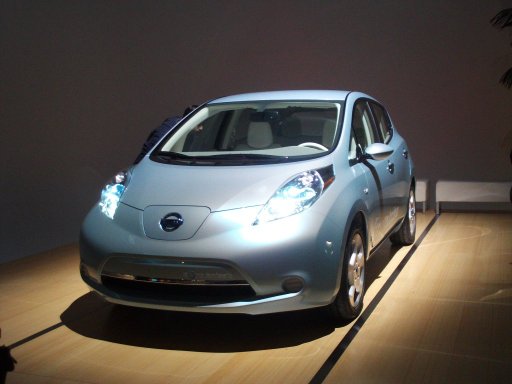
Now, a new Nissan-produced EV has officially arrived in America. Friday, Nissan showed-off their five-passenger Leaf electric car for the first time to the American media and we were there getting the latest info on what will most-likely be the first mass-produced EV family car sold in the US.
...
The company still says Leaf will have a 100-mile range, will be recharged through 110-volt home power in eight hours, while using an optional 220-volt "fast charger" can refill the lithium-ion batteries to 80% of their capacity in ½-hour, and that a 10-minute charge at a public charging facility can add about 31 miles to the car's range.
Wednesday, November 11, 2009
Rupert Murdoch wants to charge for Internet content
To be totally honest, I really hope he does this, not only will set his empire back a few years, but it means he will ultimately be less influential as less people link to and read his stuff! It seems he doesn't have a clue what he is really attempting... but then again, I'd hate to underestimate him...
Saturday, November 07, 2009
Health Care Saturday
[update] and it passed. Obama's statement.
Bummer was the Stupak amendment:
The House to vote today.
Bummer was the Stupak amendment:
Democrats were forced to make major concessions on insurance coverage for abortions to attract the final votes to secure passage, a wrenching compromise for the numerous abortion-rights advocates in their ranks.And just a little bit of procedural fun:
Many of them hope to make changes to the amendment during negotiations with the Senate, which will now become the main battleground in the health care fight as Democrats there ready their own bill for what is likely to be extensive floor debate.
The House to vote today.
You are Brilliant, and the Earth is Hiring
The Unforgettable Commencement Address to the Class of 2009, University of Portland, by Paul Hawken
When I was invited to give this speech, I was asked if I could give a simple short talk that was "direct, naked, taut, honest, passionate, lean, shivering, startling, and graceful." No pressure there.
Let's begin with the startling part. Class of 2009: you are going to have to figure out what it means to be a human being on earth at a time when every living system is declining, and the rate of decline is accelerating. Kind of a mind-boggling situation... but not one peer-reviewed paper
published in the last thirty years can refute that statement. Basically, civilization needs a new operating system, you are the programmers, and we need it within a few decades.
This planet came with a set of instructions, but we seem to have misplaced them. Important rules like don't poison the water, soil, or air, don't let the earth get overcrowded, and don't touch the thermostat have been broken. Buckminster Fuller said that spaceship earth was so ingeniously designed that no one has a clue that we are on one, flying through the universe at a million miles per hour, with no need for seatbelts, lots of room in coach, and really good food ---
but all that is changing.
There is invisible writing on the back of the diploma you will receive, and in case you didn't bring lemon juice to decode it, I can tell you what it says: You are Brilliant, and the Earth is Hiring. The earth couldn't afford to send recruiters or limos to your school. It sent you rain, sunsets, ripe cherries, night blooming jasmine, and that unbelievably cute person you are dating. Take the hint. And here's the deal: Forget that this task of planet-saving is not possible in the time required. Don't be put off by people who know what is not possible. Do what needs to
be done, and check to see if it was impossible only after you are done.
When asked if I am pessimistic or optimistic about the future, my answer is always the same: If you look at the science about what is happening on earth and aren't pessimistic, you don't understand the data. But if you meet the people who are working to restore this earth and the
lives of the poor, and you aren't optimistic, you haven't got a pulse. What I see everywhere in the world are ordinary people willing to confront despair, power, and incalculable odds in order to restore some semblance of grace, justice, and beauty to this world. The poet Adrienne Rich wrote, "So much has been destroyed I have cast my lot with those who, age after age, perversely, with no extraordinary power, reconstitute the world."
There could be no better description. Humanity is coalescing. It is reconstituting the world, and the action is taking place in schoolrooms, farms, jungles, villages, campuses, companies, refuge camps, deserts, fisheries, and slums.
You join a multitude of caring people. No one knows how many groups and organizations are working on the most salient issues of our day: climate change, poverty, deforestation, peace, water, hunger, conservation, human rights, and more. This is the largest movement the world has ever seen. Rather than control, it seeks connection. Rather than dominance, it strives to disperse concentrations of power. Like Mercy Corps, it works behind the scenes and gets the job done. Large as it is, no one knows the true size of this movement. It provides hope, support, and meaning to billions of people in the world. Its clout resides in idea, not in force. It is made up of teachers, children, peasants, businesspeople, rappers, organic farmers, nuns, artists, government workers, fisherfolk, engineers, students, incorrigible writers, weeping Muslims, concerned mothers, poets, doctors without borders, grieving Christians, street musicians, the President of the United States of America, and as the writer David James Duncan would say, the Creator, the One who loves us all in such a huge way.
There is a rabbinical teaching that says if the world is ending and the Messiah arrives, first plant a tree, and then see if the story is true. Inspiration is not garnered from the litanies of what may befall us; it resides in humanity's willingness to restore, redress, reform, rebuild, recover,
reimagine, and reconsider. "One day you finally knew what you had to do, and began, though the voices around you kept shouting their bad advice," is Mary Oliver's description of moving away from the profane toward a deep sense of connectedness to the living world.
Millions of people are working on behalf of strangers, even if the evening news is usually about the death of strangers. This kindness of strangers has religious, even mythic origins, and very specific eighteenth-century roots. Abolitionists were the first people to create a national and
global movement to defend the rights of those they did not know. Until that time, no group had filed a grievance except on behalf of itself. The founders of this movement were largely unknown -- Granville Sharp, Thomas Clarkson, Josiah Wedgwood -- and their goal was ridiculous on the face of it: at that time three out of four people in the world were enslaved. Enslaving each other was what human beings had done for ages. And the abolitionist movement was greeted with incredulity. Conservative spokesmen ridiculed the abolitionists as liberals, progressives, do-gooders, meddlers, and activists. They were told they would ruin the economy and drive England into poverty. But for the first time in history a group of people organized themselves to
help people they would never know, from whom they would never receive direct or indirect benefit. And today tens of millions of people do this every day. It is called the world
of non-profits, civil society, schools, social entrepreneurship, non-governmental organizations, and companies who place social and environmental justice at the top of their strategic goals. The scope and scale of this effort is unparalleled in history.
The living world is not "out there" somewhere, but in your heart. What do we know about life? In the words of biologist Janine Benyus, life creates the conditions that are conducive to life. I can think of no better motto for a future economy. We have tens of thousands of abandoned homes without people and tens of thousands of abandoned people without homes. We have failed bankers advising failed regulators on how to save failed assets. We are the only species on the planet without full employment. Brilliant. Wehave an economy that tells us that it is cheaper to destroy earth in real time rather than renew, restore, and sustain it. You can print money to bail out a bank but you can't print life to bail out a planet. At present we are stealing the future, selling it in the present, and calling it gross domestic product. We can just as easily have an economy that is based on healing the future instead of stealing it. We can either create assets for the future or take the assets of the future. One is called restoration and the other exploitation. And whenever we exploit the earth we exploit people and cause untold suffering. Working for the earth is not a way to get rich, it is a way to be rich.
The first living cell came into being nearly 40 million centuries ago, and its direct descendants are in all of our bloodstreams. Literally you are breathing molecules this very second that were inhaled by Moses, Mother Teresa, and Bono. We are vastly interconnected. Our fates are
inseparable. We are here because the dream of every cell is to become two cells. And dreams come true. In each of you are one quadrillion cells, 90 percent of which are not human cells. Your body is a community, and without those other microorganisms you would perish in hours. Each human cell has 400 billion molecules conducting millions of processes between trillions of atoms. The total cellular activity in one human body is staggering: one septillion actions at any one moment, a one with twenty-four zeros after it. In a millisecond, our body has undergone ten times more processes than there are stars in the universe, which is exactly what Charles Darwin foretold when he said science would discover that each living creature was a "little universe, formed of a host of self-propagating organisms, inconceivably minute and as numerous as the stars of heaven."
So I have two questions for you all: First, can you feel your body? Stop for a moment. Feel your body. One septillion activities going on simultaneously, and your body does this so well you are free to ignore it, and wonder instead when this speech will end. You can feel it. It is called life.
This is who you are. Second question: who is in charge of your body? Who is managing those molecules? Hopefully not a political party. Life is creating the conditions that are conducive to life inside you, just as in all of nature. Our innate nature is to create the conditions that are conducive
to life. What I want you to imagine is that collectively humanity is evincing a deep innate wisdom in coming together to heal the wounds and insults of the past.
Ralph Waldo Emerson once asked what we would do if the stars only came out once every thousand years. No one would sleep that night, of course. The world would create new religions
overnight. We would be ecstatic, delirious, made rapturous by the glory of God. Instead, the stars come out every night and we watch television.
This extraordinary time when we are globally aware of each other and the multiple dangers that threaten civilization has never happened, not in a thousand years, not in ten thousand years. Each of us is as complex and beautiful as all the stars in the universe. We have done great things and we have gone way off course in terms of honoring creation. You are graduating to the most amazing, stupefying challenge ever bequeathed to any generation. The generations before you failed. They didn't stay up all night. They got distracted and lost sight of the fact that life is a miracle every moment of your existence. Nature beckons you to be on her side. You couldn't ask for a better boss. The most unrealistic person in the world is the cynic, not the dreamer. Hope only makes sense when it doesn't make sense to be hopeful. This is your century. Take it and run as if your life depends on it.
..........
Paul Hawken is a renowned entrepreneur, visionary environmental activist, and author of many books, most recently Blessed Unrest: How the Largest Movement in the World Came into Being and Why No One Saw It Coming. He was presented with an honorary doctorate of humane letters by University president Father Bill Beauchamp, C.S.C., in May, when he delivered this superb speech. Our thanks especially to Erica Linson for her help making that moment possible.
When I was invited to give this speech, I was asked if I could give a simple short talk that was "direct, naked, taut, honest, passionate, lean, shivering, startling, and graceful." No pressure there.
Let's begin with the startling part. Class of 2009: you are going to have to figure out what it means to be a human being on earth at a time when every living system is declining, and the rate of decline is accelerating. Kind of a mind-boggling situation... but not one peer-reviewed paper
published in the last thirty years can refute that statement. Basically, civilization needs a new operating system, you are the programmers, and we need it within a few decades.
This planet came with a set of instructions, but we seem to have misplaced them. Important rules like don't poison the water, soil, or air, don't let the earth get overcrowded, and don't touch the thermostat have been broken. Buckminster Fuller said that spaceship earth was so ingeniously designed that no one has a clue that we are on one, flying through the universe at a million miles per hour, with no need for seatbelts, lots of room in coach, and really good food ---
but all that is changing.
There is invisible writing on the back of the diploma you will receive, and in case you didn't bring lemon juice to decode it, I can tell you what it says: You are Brilliant, and the Earth is Hiring. The earth couldn't afford to send recruiters or limos to your school. It sent you rain, sunsets, ripe cherries, night blooming jasmine, and that unbelievably cute person you are dating. Take the hint. And here's the deal: Forget that this task of planet-saving is not possible in the time required. Don't be put off by people who know what is not possible. Do what needs to
be done, and check to see if it was impossible only after you are done.
When asked if I am pessimistic or optimistic about the future, my answer is always the same: If you look at the science about what is happening on earth and aren't pessimistic, you don't understand the data. But if you meet the people who are working to restore this earth and the
lives of the poor, and you aren't optimistic, you haven't got a pulse. What I see everywhere in the world are ordinary people willing to confront despair, power, and incalculable odds in order to restore some semblance of grace, justice, and beauty to this world. The poet Adrienne Rich wrote, "So much has been destroyed I have cast my lot with those who, age after age, perversely, with no extraordinary power, reconstitute the world."
There could be no better description. Humanity is coalescing. It is reconstituting the world, and the action is taking place in schoolrooms, farms, jungles, villages, campuses, companies, refuge camps, deserts, fisheries, and slums.
You join a multitude of caring people. No one knows how many groups and organizations are working on the most salient issues of our day: climate change, poverty, deforestation, peace, water, hunger, conservation, human rights, and more. This is the largest movement the world has ever seen. Rather than control, it seeks connection. Rather than dominance, it strives to disperse concentrations of power. Like Mercy Corps, it works behind the scenes and gets the job done. Large as it is, no one knows the true size of this movement. It provides hope, support, and meaning to billions of people in the world. Its clout resides in idea, not in force. It is made up of teachers, children, peasants, businesspeople, rappers, organic farmers, nuns, artists, government workers, fisherfolk, engineers, students, incorrigible writers, weeping Muslims, concerned mothers, poets, doctors without borders, grieving Christians, street musicians, the President of the United States of America, and as the writer David James Duncan would say, the Creator, the One who loves us all in such a huge way.
There is a rabbinical teaching that says if the world is ending and the Messiah arrives, first plant a tree, and then see if the story is true. Inspiration is not garnered from the litanies of what may befall us; it resides in humanity's willingness to restore, redress, reform, rebuild, recover,
reimagine, and reconsider. "One day you finally knew what you had to do, and began, though the voices around you kept shouting their bad advice," is Mary Oliver's description of moving away from the profane toward a deep sense of connectedness to the living world.
Millions of people are working on behalf of strangers, even if the evening news is usually about the death of strangers. This kindness of strangers has religious, even mythic origins, and very specific eighteenth-century roots. Abolitionists were the first people to create a national and
global movement to defend the rights of those they did not know. Until that time, no group had filed a grievance except on behalf of itself. The founders of this movement were largely unknown -- Granville Sharp, Thomas Clarkson, Josiah Wedgwood -- and their goal was ridiculous on the face of it: at that time three out of four people in the world were enslaved. Enslaving each other was what human beings had done for ages. And the abolitionist movement was greeted with incredulity. Conservative spokesmen ridiculed the abolitionists as liberals, progressives, do-gooders, meddlers, and activists. They were told they would ruin the economy and drive England into poverty. But for the first time in history a group of people organized themselves to
help people they would never know, from whom they would never receive direct or indirect benefit. And today tens of millions of people do this every day. It is called the world
of non-profits, civil society, schools, social entrepreneurship, non-governmental organizations, and companies who place social and environmental justice at the top of their strategic goals. The scope and scale of this effort is unparalleled in history.
The living world is not "out there" somewhere, but in your heart. What do we know about life? In the words of biologist Janine Benyus, life creates the conditions that are conducive to life. I can think of no better motto for a future economy. We have tens of thousands of abandoned homes without people and tens of thousands of abandoned people without homes. We have failed bankers advising failed regulators on how to save failed assets. We are the only species on the planet without full employment. Brilliant. Wehave an economy that tells us that it is cheaper to destroy earth in real time rather than renew, restore, and sustain it. You can print money to bail out a bank but you can't print life to bail out a planet. At present we are stealing the future, selling it in the present, and calling it gross domestic product. We can just as easily have an economy that is based on healing the future instead of stealing it. We can either create assets for the future or take the assets of the future. One is called restoration and the other exploitation. And whenever we exploit the earth we exploit people and cause untold suffering. Working for the earth is not a way to get rich, it is a way to be rich.
The first living cell came into being nearly 40 million centuries ago, and its direct descendants are in all of our bloodstreams. Literally you are breathing molecules this very second that were inhaled by Moses, Mother Teresa, and Bono. We are vastly interconnected. Our fates are
inseparable. We are here because the dream of every cell is to become two cells. And dreams come true. In each of you are one quadrillion cells, 90 percent of which are not human cells. Your body is a community, and without those other microorganisms you would perish in hours. Each human cell has 400 billion molecules conducting millions of processes between trillions of atoms. The total cellular activity in one human body is staggering: one septillion actions at any one moment, a one with twenty-four zeros after it. In a millisecond, our body has undergone ten times more processes than there are stars in the universe, which is exactly what Charles Darwin foretold when he said science would discover that each living creature was a "little universe, formed of a host of self-propagating organisms, inconceivably minute and as numerous as the stars of heaven."
So I have two questions for you all: First, can you feel your body? Stop for a moment. Feel your body. One septillion activities going on simultaneously, and your body does this so well you are free to ignore it, and wonder instead when this speech will end. You can feel it. It is called life.
This is who you are. Second question: who is in charge of your body? Who is managing those molecules? Hopefully not a political party. Life is creating the conditions that are conducive to life inside you, just as in all of nature. Our innate nature is to create the conditions that are conducive
to life. What I want you to imagine is that collectively humanity is evincing a deep innate wisdom in coming together to heal the wounds and insults of the past.
Ralph Waldo Emerson once asked what we would do if the stars only came out once every thousand years. No one would sleep that night, of course. The world would create new religions
overnight. We would be ecstatic, delirious, made rapturous by the glory of God. Instead, the stars come out every night and we watch television.
This extraordinary time when we are globally aware of each other and the multiple dangers that threaten civilization has never happened, not in a thousand years, not in ten thousand years. Each of us is as complex and beautiful as all the stars in the universe. We have done great things and we have gone way off course in terms of honoring creation. You are graduating to the most amazing, stupefying challenge ever bequeathed to any generation. The generations before you failed. They didn't stay up all night. They got distracted and lost sight of the fact that life is a miracle every moment of your existence. Nature beckons you to be on her side. You couldn't ask for a better boss. The most unrealistic person in the world is the cynic, not the dreamer. Hope only makes sense when it doesn't make sense to be hopeful. This is your century. Take it and run as if your life depends on it.
..........
Paul Hawken is a renowned entrepreneur, visionary environmental activist, and author of many books, most recently Blessed Unrest: How the Largest Movement in the World Came into Being and Why No One Saw It Coming. He was presented with an honorary doctorate of humane letters by University president Father Bill Beauchamp, C.S.C., in May, when he delivered this superb speech. Our thanks especially to Erica Linson for her help making that moment possible.
Friday, November 06, 2009
Wednesday, November 04, 2009
Does the Vaccine Matter?
Whether this season’s swine flu turns out to be deadly or mild, most experts agree that it’s only a matter of time before we’re hit by a truly devastating flu pandemic—one that might kill more people worldwide than have died of the plague and AIDS combined. In the U.S., the main lines of defense are pharmaceutical—vaccines and antiviral drugs to limit the spread of flu and prevent people from dying from it. Yet now some flu experts are challenging the medical orthodoxy and arguing that for those most in need of protection, flu shots and antiviral drugs may provide little to none. So where does that leave us if a bad pandemic strikes?
Smarter sleuthing can save our online privacy

Police don't need intrusive powers to tackle modern Internet crime – there's a new paradigm -- good old basic thinking and analysis...
Tuesday, November 03, 2009
Paying off your sleep debt
Apparently a good sleep in on the weekend doesn't quite cut it
In studies over the years, scientists have found that it can take a week or more for the cognitive and physiological consequences of poor sleep to wear off — even after increasing sleep.Interestingly, you can save up -- I didn't know about this:
In a study at the Walter Reed Army Institute of Research in 2003, for example, scientists examined the cognitive effects of a week of poor sleep, followed by three days of sleeping at least eight hours a night. The scientists found that the “recovery” sleep did not fully reverse declines in performance on a test of reaction times and other psychomotor tasks, especially for subjects who had been forced to sleep only three or five hours a night.
In a similar study in 2008, scientists at the Karolinska Institute in Stockholm found that when subjects slept four hours a night over five days, and then “recovered” with eight hours a night over the following week, they still showed slight residual cognitive impairments a week later, even though they reported no sleepiness.
But in another study, also at the Walter Reed Army Institute of Research, scientists found that people recovered much more quickly from a week of poor sleep when it was preceded by a “banking” week that included nights with 10 hours of shuteye. In other words, if you know you have a week of little sleep ahead of you, try loading up on sleep beforehand, not simply afterward..
Monday, November 02, 2009
nook

these e-readers are getting closer and closer to what I am looking for... The nook is a new one with wi-fi, a touch screen, allows the uploading and reading of pdfs, the ability to annotate notes, is built on open source android technology, and most importantly, the ability to share documents... although with limitations, of course. Almost there...
Subscribe to:
Posts (Atom)